
 PL
PL
Self-aligning ball bearing 2310K+H2310 CT 50 × 110 × 55 mm
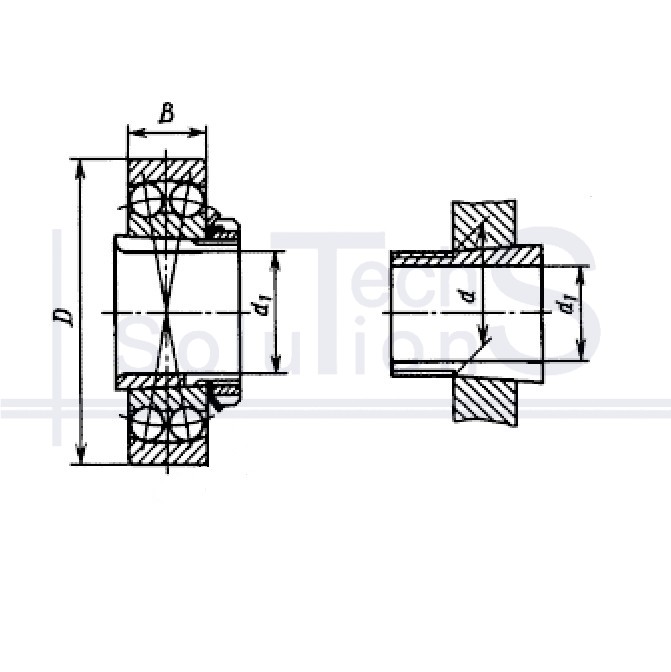
Specifications
2310K+H2310 CT
- Designation
- 2310K+H2310
- Manufacturer
- CT
- Inner diameter d
- 50 mm
- Outer diameter D
- 110 mm
- Width B
- 55 mm
- Dynamic load rating C
- 64.5 kN
- Static load rating C0
- 19.8 kN
- Weight
- 1.93 kg
- Outer ring width C
- 40 mm
- Rolling elements
- Ball
- Load type
- Radial
- Number of rows
- Double-row
- Bushing seat diameter d1
- 45 mm
- Mounting hole
- Conical
- Clamping sleeve
- H2310
Product summary
2310K+H2310: self-aligning ball bearing, brand CT. Bore diameter d 50 mm, outside diameter D 110 mm, width B 55 mm. Dynamic load rating C 64.5 kN, static load rating C0 19.8 kN, weight 1.93 kg.
The spherical raceway of the outer ring lets the inner ring with the balls swivel relative to it, so the bearing compensates for misalignment between shaft and housing. Friction torque is lower than in a spherical roller bearing, and so is the load capacity.
Where it is used
Line and drive shafts on three or more supports, fans, textile and agricultural machinery, conveyors where housings are bolted to a welded frame without common line boring. Friction torque is lower than in a spherical roller bearing, so the support runs cooler in continuous operation.
When not to use
Do not fit it instead of a spherical roller bearing in a loaded assembly: the point contact of the balls gives a load rating C several times lower, and life falls with the cube of the C/P ratio. Half the load rating means one eighth of the life. Do not fit it instead of a rigid ball bearing where angular stiffness is needed: the outer ring does not hold the shaft angle, so the assembly behaves like a hinge and nearby gear meshes and seals suffer. Do not use it where the bearing is subject to axial load.

Technical data is for information only. Drawings may not show all design features.
About the technical data
* - Technical specifications and other information are provided for reference only. We provide this data and believe the information to be reliable, however, no guarantee of accuracy or completeness of such information can be provided.
- Drawings and images may not reflect all design features of the product.